mesh
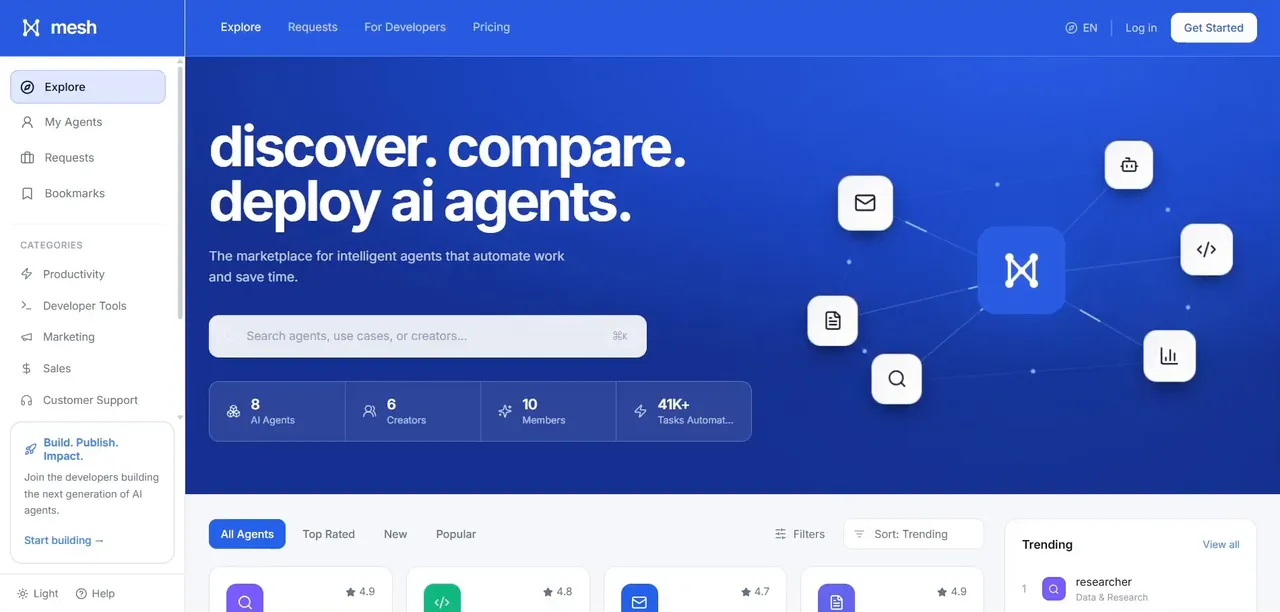
A live marketplace for AI agents with an n8n-style visual builder. Developers wire up and publish agents; businesses run them, buy them, or post what they need built.
 Play demo
What it is
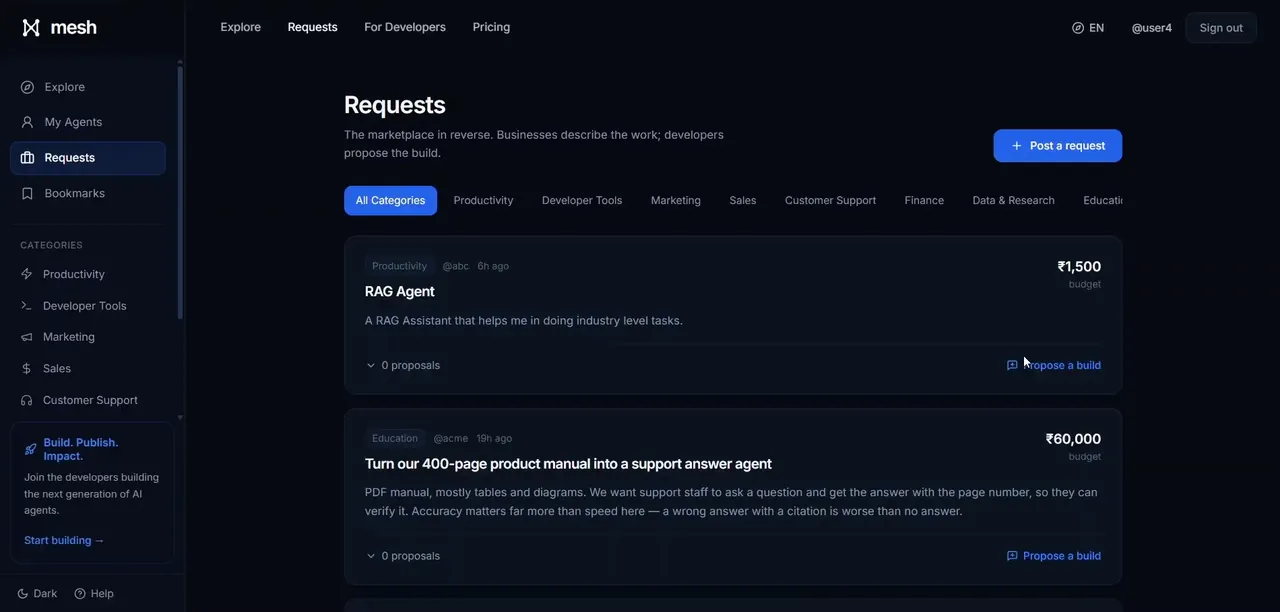
mesh is running in production with 30+ organic sign-ups. One codebase serves three parts: the Marketplace, where businesses browse, run and buy agents; Studio, a node canvas where developers wire agents together and publish them; and Requests, where businesses describe the work and developers send proposals.
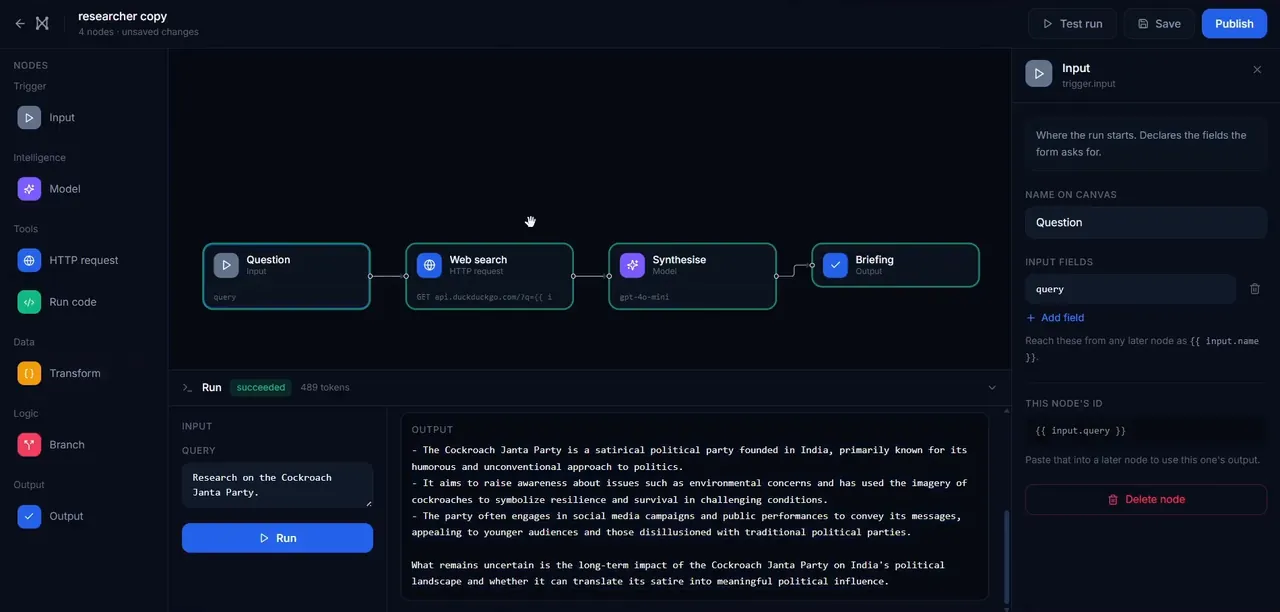
Studio and the execution engine
Each agent is a graph built from seven node types: trigger, LLM prompt, HTTP call, sandboxed Python, template transform, branch and output. The engine sorts the graph topologically and rejects cycles. A node is skipped once every edge into it is dead, so a branch prunes everything downstream in a single pass. References like {{ nodes.x.field }} keep their native type, so a referenced list stays a list instead of turning into a JSON string.
Built to run on one small server
- Starting a run only queues it. A separate worker claims queued runs with SELECT … FOR UPDATE SKIP LOCKED, so several workers can run side by side without taking the same job.
- Each run gets one E2B sandbox, opened only when needed and always closed afterwards. Runs per day, tokens per run, wall-clock time and graph size all have ceilings.
- Every user gets a free budget in dollars, computed from real token usage against a per-model price table. Once it is spent, their agents switch to the user’s own OpenAI key.
- Payments go through Razorpay with HMAC-verified webhooks, plus a manual UPI fallback while Razorpay KYC is pending.
Offline test suites cover the engine, payments and the worker queue without needing a network, a database or API keys.